

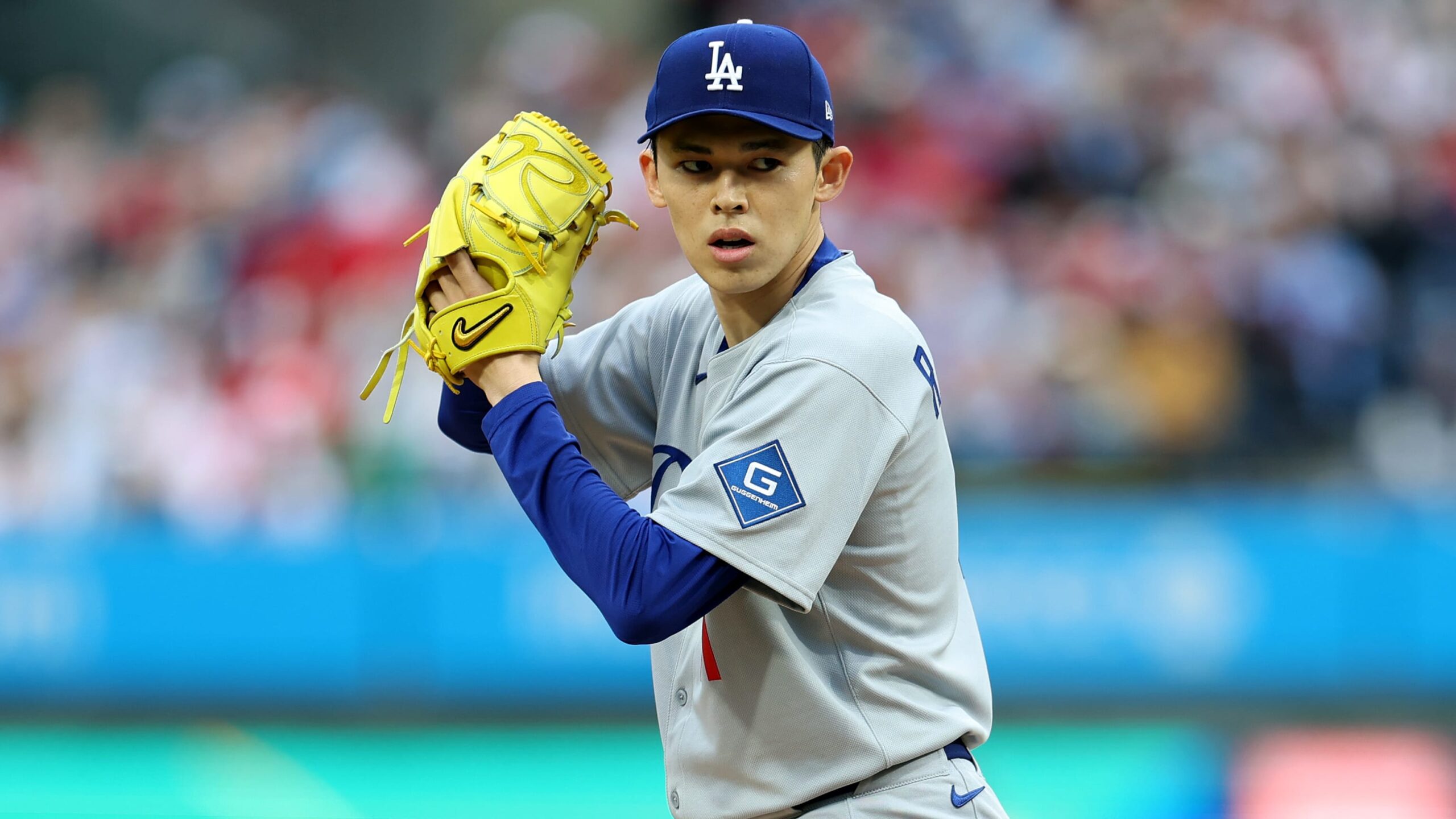
“Immaturity” Exposed: Roki Sasaki’s “Bonus Incident” — Two Japanese Dodgers Staff Reportedly Miss Out on Over $450,000?
Teams that advance to the MLB playoffs receive bonus payouts.
The amount increases as teams progress, and last year the Dodgers—who won the World Series—received the largest total, about $50M+. This pool is divided among players, staff, and support personnel, with each team deciding how to distribute it.
“Players usually take the lead in deciding distribution—full shares for those who worked the whole season, half shares for those on the roster part-time, and so on. On average, members of a World Series-winning team receive over $450K+. Even staff and support personnel who worked the full season receive amounts similar to players,” said one correspondent.
However, it appears there may have been people within the Dodgers who did not receive a share.
“It’s widely rumored that a Japanese trainer and physical therapist didn’t get paid,” another correspondent said.
According to reports, Roki Sasaki (24) brought over three personal staff members from the Chiba Lotte Marines when he joined the Dodgers via posting in the 2024 offseason: a trainer, a physical therapist, and a nutritionist.
All three were highly regarded, and their departure reportedly upset Lotte players.
While the nutritionist works under a personal contract with Sasaki, the trainer and physical therapist are employed by the Dodgers—meaning they should qualify for postseason bonus shares.
“There were some complaints that they were focusing primarily on Sasaki, but since they’re team employees, they’re eligible. If they were excluded, Sasaki should have advocated for them—but perhaps he didn’t think that far ahead.”
“Lack of Awareness for Others”
A TV industry insider added:
“It’s not surprising. Sasaki is still immature. Being self-centered at his age might be understandable, but as an adult, you’re expected to be more aware of others. For example, Yu Darvish (Padres) takes great care of team staff—he hosts dinners and expresses gratitude. Sasaki doesn’t show that kind of consideration.”
The source also noted that someone who had supported Sasaki for a long time was only recently thanked by him for the first time—suggesting some growth, but still limited.
On-Field Struggles and Criticism
In a game against the Nationals (Japan time April 6), where Sasaki allowed 6 runs over 5 innings, he commented:
“I relied too much on sliders early, so later I couldn’t establish my fastball and forkball. That’s probably why I got stuck the second time through the order.”
This comment was perceived by some as shifting blame onto catcher pitch-calling rather than taking responsibility.
MLB teams, while full of strong personalities, are highly team-oriented—arguably even more so than Japanese baseball. Players who don’t align with the group can become isolated.
On April 13 against the Rangers, Sasaki gave up 2 runs over 4 innings with 5 walks, taking his second loss of the season. Control issues persist, and U.S. media have also reported that opposing runners may be picking up on his pitching “tells.”
After the game, Sasaki said:
“I haven’t been able to consistently throw pitches I’m satisfied with. It’s simply that things aren’t working technically. It’s just a lack of ability.”
Closing Note
While issues like control and pitch tipping can potentially be fixed, questions remain about whether a player’s personality, mindset, and approach can change.
That’s what makes his future increasingly concerning.